|
$12.95
|
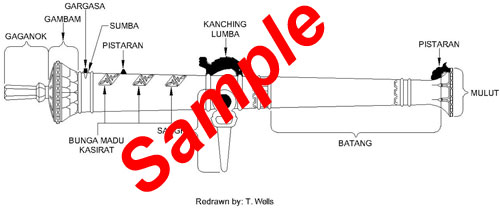
Above
drawing showing parts of an Asian cannon
At any given time there are often several bronze
cannons for sale here on the internet on eBay as well as several other
web
sites. The Asian type cannons are often referred to as; LANTAKA, SWIVEL
GUN, SWIVEL CANNON, etc.
There are also European cannon commonly advertised for sale over the
internet. Regarding
both types of cannons – I have noticed that many appear to be genuine,
some are
questionable while some other’s appear to be bad imitations.
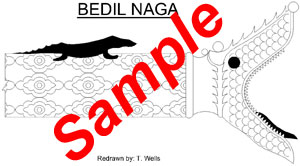
Detailed
drawing above showing parts of a Brunei manufactured Bedil Naga cannon.
If
you are a cannon enthusiast and need or would
like to have more information on these
ancient weapons then this e-book is for
you. The title is; CANNON
JOURNAL – Compilation Of
Info On Bronze Asian And European Type Cannons (1500-1800’s)
and it consist of 89 pages total with
36 photos, 11 detailed drawings,
12 cannon information charts and two maps of
Southeast Asia.
Detailed
drawing above showing parts of an Asian
Breech Loading cannon.
Table of Contents as follows;
- PART 1 - Brunei Cannon by P.M. Shariffuddin.
- I.
The Origin and History of Brunei Cannon.
- II.
Classification of Cannons in the Brunei Museum (1968).
- III.
Discussion of Brunei Terms.
- IV.
Brunei terms for cannon parts.
- V.
Decorations of Brunei Cannon.
- VI.
Uses of Cannon in Brunei.
- VII.
Measurements of Selected Cannons in Brunei Museum.
- VIII.
Plates of Cannons in Brunei Collection.
- Plate
XXXV : Bedil Gargabus, side
view of type.
- Plate
XXXVI : Bedil Naga, side view of type.
- Plate
XXXVII a: Bedil Naga, whole
corcodile type.
- Plate
XXXVII b: Bedil Naga, with
twisted tail.
- Plate
XXXVIII : Bedil Buloh type.
- Plate
XXXIX : Bedil Lapis type.
- Plate
XL a: Mariam type.
- Plate
XL b: Mariam: Miniature form.
- Plate
XLI : Boom: one of the only
two known..
- Plate
XLII a: Miniature type: crocodile
from (side view).
- Plate
XLIII a: Miniature: common buffalo
form.
- Plate
XLIII b: Miniature: common buffalo
form.
- Plate
XLIV a: Miniature: twin.
- Plate
XLIV b: Twin Bedil.
- Plate
XLV : Ringed Bedil of rare type.
- Plate
XLVI a: "Boat" cannon: from side.
- Plate
XLVI b: "Boat" cannon: from above.
- Plate
XLVII a: Barrel (Batang) showing
foresight.
- Plate
XLVII b: Muzzle (Mulut).
- Plate
XLVIII a: Touch-hole for firing
(Sumba) with two lugs (Gargasa).
- Plate XLVIII b: Swivel (Sanka).
- Plate
XLIX a: Back-sight (Pistaran).
- Plate
XLIX b: Gaganok of typical Brunei
cannon form.
- Asian
Breech Loading Cannon.
- Large
Euro-Asian Swivel Cannon.
- PART 2 - Brunei Cannons by Tom Harrisson.
- I.
Looking out from Brunei.
- II.
Malacca and Brunei.
- III.
The Philippines and Celebes.
- IV.
The Malay Peninsula and Date Problems.
- V.
Thailand.
- VI.
Burma.
- VII.
Thailand and Brunei.
- VIII.
Before or Without Guns.
- IX.
European Technical Influence.
- X.
A Last Question: the Spread of Brunei Guns?
- XI.
Modern Answers, ancient echoes?
- APPENDIX
A, B and C.
- PART 3 - GENERAL CANNON INFO by Tony Wells.
- I.
Introduction.
- II.
Materials Used in Bronze Guns in the Late 18th Century.
- III.
Longevity of Guns Used at Sea.
- IV.
Brass Guns verses Iron Guns.
- V.
Examples of some popular Ships Guns.
- VI
How Guns Were Named.
- VII.
List of Guns and Descriptions.
- VIII.
How Many Guns Per Ship?
- IX.
Weights Stamped On Guns.
- X.
Genuine or Fake Cannons?
- XI.
Conclusion?
- Drawing
showing parts of a European/American Cannon.
- Drawing
showing PETIEROE A BRAGA and
the MOSCOLO.
- Important
Cannon Measurement Locations.
Above
is a sample of some of the reference material included.
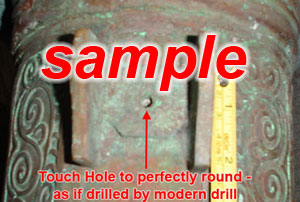
The
above photo is from PART 3 - VII. Genuine or Fake Cannons?

The
above photo is from PART 3 - VII and shows the steel pipe sleeve inside
the barrel of a fake bronze cannon.
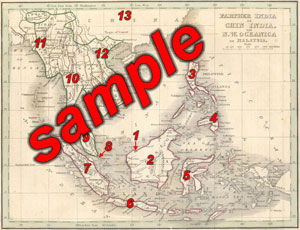
Above
shows a circa 1835 Southeast Asian map with locations number for easy
location reference.
ORDER INFO
There is no shipping cost because this 2 MB
pdf file (Adobe Reader file) will be emailed to you, in most cases
within 24
hours or less. Then you will be able to read it directly on your
computer and
print it out if you wish to do so. You will need Adobe Reader Version
6.0 (or
higher) to open, read and print this file. It is free and can be
downloaded at www.adobe.com.
Tony
Wells is also the author of the above book, Shipwrecks & Sunken
Treasure In Southeast Asia (published by: Times Editions
(Singapore) in
1995).
|